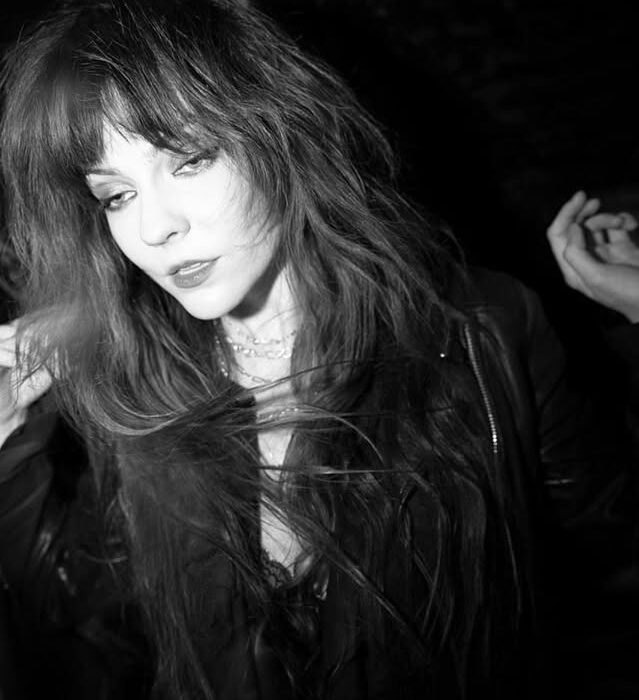
Artist: ‘Angharad’
Album Title: ‘Motherland’
Release Date: 01.03.2024
Label: Libertino Records
Album Title: ‘Motherland’
Release Date: 01.03.2024
Label: Libertino Records
Format: Digital Album / CD / Limited Pink Vinyl LP
Distribution: PYST
Social Links: @thisisangharad @Libertinorecs @Beastpruk
Distribution: PYST
Social Links: @thisisangharad @Libertinorecs @Beastpruk
Quick Listen via Soundcloud
Streaming Services
Motherland Assets WAV/MP3/PICS
Swansea based singer songwriter ANGHARAD releases her anticipated debut album ‘Motherland’ on the 1st of March 2024 via Libertino Records. Deemed as an artist and songwriter ‘with fire, passion and unflinching honesty at the core of all her music’ Angharad’s music has been described by Deb Grant, BBC 6 Music as ‘Provocative’ and «A confident and positive ‘call to arms’ for women in the music industry» by Cassie Fox of Loud Women
Angharad Added:
«My mother is also a musician, but took a back seat from her musical career for some 15 years in order to focus on raising me and my sister. Even before I was ready for children, it played on my mind how could I follow a career in music and become a mother. I used to play out different scenarios in my mind, such as giving myself a certain amount of years, then a change of career.
When the time came, I wasn’t ready for a career change. I felt I had more to offer creatively than ever before. I’d reached an age where I had knowledge, confidence and useful networks to really progress to the next level. I wasn’t prepared to let all that go simply because I’d decided to start a family.
So far, starting a family has enhanced my creative output. I just need to be flexible, and open to thinking differently about how to manage it and get it out there. My wish is to see the industry being as open to these changes as me, and every other mother who’s tirelessly figuring out how to do both.”
When the time came, I wasn’t ready for a career change. I felt I had more to offer creatively than ever before. I’d reached an age where I had knowledge, confidence and useful networks to really progress to the next level. I wasn’t prepared to let all that go simply because I’d decided to start a family.
So far, starting a family has enhanced my creative output. I just need to be flexible, and open to thinking differently about how to manage it and get it out there. My wish is to see the industry being as open to these changes as me, and every other mother who’s tirelessly figuring out how to do both.”
Motherland – Angharad
I am mother . These are the first words we hear after hitting play on Swansea-based [genre: e.g. pop-folk storyteller] Angharad’s debut album Motherland, and this affirmation resounds across the twelve tracks that follow, revealing the gravity of what initially appears to be a simple statement but is in fact an assertion weighted by the story of mothers and motherhood across the ages. I am strong. I am gentle. I am mountainwoman. I am nourisher . I am life-giver . I am all you need right now. I am the moon and the stars. I am everything to you. I am your world.
It’s said that early motherhood is simultaneously the happiest and hardest period of
time a mother can experience, and this is reflected by the juxtaposition of the dreamlike
spoken-word jazzscape of title track ‘Motherland’ and the bass-driven midnight-feed
nightmare of ‘Postpartum’. In ‘Motherland’ we listen as the tidal pull of the moon ushers new life in – “nocturnal and luminous” – while in the album’s first single ‘Postpartum’ both music and mother unravel in an unapologetic cacophony of fatigue and repetition: “I’m exhausted and I’m broken, exhausted and I’m broken, I’m exhausted and I’m broken…get off my tits.”
As the songs that open the album, these two compositions couldn’t be more different, but as Angharad points out “…this is exactly what motherhood is like. It’s the joys and horrors.
Elation and despair . I put those songs next to each other because that’s how it is in real life – you can feel both emotions simultaneously .”
Although Angharad is an experienced musician, perhaps best-known as part of
revivalist Welsh folk band Calan, Motherland represents her first foray into songwriting –
something which has long been an ambition. “I’ve always felt like I had a lot to say , but I
presumed that someone else somewhere would be saying the same things. It took me so long to realise nobody else can tell my story .” However , it was the double isolation of experiencing early motherhood during Covid lockdowns that finally made her pull on this songwriting thread. “I’ve always collaborated with others when it comes to music, but lockdown forced me to work alone. I’ve written melodies in the past, but never lyrics. I began with making up songs to get my daughter Tanwen to sleep, and then I’d find myself fine-tuning them during daily walks with her in the pram, or making up new ones. I’d never sung before but, after becoming a mother , finding my voice was both a necessity and a gift.”
Being out in nature during those spring lockdown walks became a strong influence
on the writing of the songs, reflecting how parenthood can promote a realignment with the natural world. But, in ‘Hey , There’s Always the Night’, there is also the acknowledgement that first child can squeeze a creative life – the whirlwind of the day’s activities forcing the artist to snatch inspired moments out of hours. Angharad invites us into this quiet exhale at the end of a day by imagining “when the baby’s asleep, I will write,” but over the course of the song there’s a realisation that mothers never clock off – who else “is keeping us clean and fed and dressed?” – and so the Muse will have to wait her turn.
on the writing of the songs, reflecting how parenthood can promote a realignment with the natural world. But, in ‘Hey , There’s Always the Night’, there is also the acknowledgement that first child can squeeze a creative life – the whirlwind of the day’s activities forcing the artist to snatch inspired moments out of hours. Angharad invites us into this quiet exhale at the end of a day by imagining “when the baby’s asleep, I will write,” but over the course of the song there’s a realisation that mothers never clock off – who else “is keeping us clean and fed and dressed?” – and so the Muse will have to wait her turn.
If nature provided inspiration, then so too did the fact that these songwriting walks
were plotted across her hometown Swansea and, when restrictions eased, the wider map of Wales. Angharad’s geographical motherland provides the setting for this album which, even though it covers universal themes, is unashamedly and defiantly Welsh. Angharad admits she has her parents to thank for this desire to tell the stories of ‘here’ rather than ‘there’. Her mother is the Celtic harpist Delyth Jenkins, who Angharad plays violin alongside in folk duo DnA, and her father is the late poet Nigel Jenkins. His long poem ‘Advice to a Young Poet’ is often cited as a ‘go-to’ for writers seeking inspiration and direction – counting last year ’s Forward Prize winner Kim Moore amongst its disciples – and Angharad says it’s a piece she’s revisited a lot while writing the album, having never really put pen to paper before.
In the poem, Nigel writes that “[it] may sometimes be there, but here is rarely too small a
place.” Entering parenthood after losing a parent yourself often sees raw grief resurface, and
so it was a poignant moment to have early listeners pick out the influence of John Cale and
Patti Smith on the sound of Motherland, two big musicians from Angharad’s childhood: “I
remember my parents driving us to the leisure centre when we were young and Mum telling
Dad to stop playing Patti Smith’s Horses because of the swearing. That cassette was on
constant rotation in the car , along with Paris 1919 by John Cale. I wasn’t conscious of their
effect on my own music, so it was very moving to have people hear their influence on
Motherland. It took me right back to listening to them in the car with my dad.”
place.” Entering parenthood after losing a parent yourself often sees raw grief resurface, and
so it was a poignant moment to have early listeners pick out the influence of John Cale and
Patti Smith on the sound of Motherland, two big musicians from Angharad’s childhood: “I
remember my parents driving us to the leisure centre when we were young and Mum telling
Dad to stop playing Patti Smith’s Horses because of the swearing. That cassette was on
constant rotation in the car , along with Paris 1919 by John Cale. I wasn’t conscious of their
effect on my own music, so it was very moving to have people hear their influence on
Motherland. It took me right back to listening to them in the car with my dad.”
Though she has dabbled with her mother ’s instrument the Celtic harp, the violin has
always been Angharad’s main love, taking it up alongside the piano when she was a child. In
the foot-tapping funk-inspired ‘Hormone Called Love’, she reveals that when she was
growing up she wanted to be both a musician and a mother . But with adulthood came the
realisation that women have long been told to choose either children or career: “Having
children had a huge effect on my mother ’s career as a musician while she raised us. It was
only after my sister and I became young adults that she returned to music properly . Even
before I was ready to have children, this question was always something that was on my
mind: how can you be both a musician and a mother?” This question is explored across the
groove riffs of ‘Hormone Called Love’ and, elsewhere on the album, ‘Because I Am a
Woman’ (released as a Double A single alongside ‘Postpartum’) attacks deep-rooted
misogyny with a disco upbeat. Angharad wants Motherland to change the narrative, proving
that you can make music and be a mother at the same time. These things are not mutually
exclusive.
always been Angharad’s main love, taking it up alongside the piano when she was a child. In
the foot-tapping funk-inspired ‘Hormone Called Love’, she reveals that when she was
growing up she wanted to be both a musician and a mother . But with adulthood came the
realisation that women have long been told to choose either children or career: “Having
children had a huge effect on my mother ’s career as a musician while she raised us. It was
only after my sister and I became young adults that she returned to music properly . Even
before I was ready to have children, this question was always something that was on my
mind: how can you be both a musician and a mother?” This question is explored across the
groove riffs of ‘Hormone Called Love’ and, elsewhere on the album, ‘Because I Am a
Woman’ (released as a Double A single alongside ‘Postpartum’) attacks deep-rooted
misogyny with a disco upbeat. Angharad wants Motherland to change the narrative, proving
that you can make music and be a mother at the same time. These things are not mutually
exclusive.
With the exception of playing as part of the album’s string quartet, the recording of
Motherland saw Angharad put down her instruments and focus solely on singing and
composition. All of the songs on the album (as well as a few that didn’t make it) were written
during a prolific period of creativity in 2021, and recorded in the autumn of that year in
producer friend Aeddan Williams’ attic studio while Angharad was expecting her second
child. Surrounded by vintage Welsh tourist board posters, the two friends were joined by
musicians from the Royal Welsh College and managed to record the whole album in a
weekend. “Albums usually take a lot longer than that to write and record,” says Angharad,
“but once I started writing it was like opening a rusty tap and all the songs appeared within
six months. Sleep deprivation helped in a way , giving me more hours in the day to write!”
Luckily the recording of Motherland was wrapped up before Angharad’s second child Idris
made an appearance in March 2022, but once again maternity leave has been accompanied
by a visit from the Muse: “It’s not sustainable to have a baby each time you need to write a
new album, but baby number two was quickly followed by album number two – at least in
terms of lyrics and melodies. It seems like my creative process is greatly aided by my time
being squeezed.”
As an album of songs Motherland takes a trip across many genres, but with a story
that unifies its diverse parts. And this is a story only Angharad can tell – from the soaring
power of the string-lush anthem ‘Don’t Burn Bridges’ to the gentle, tragic beauty of ‘Little
Baby Embryo’. The second Double A single, ‘I Don’t Know How / Time, Time Again’, will pair
two of Motherland’s explorations of time passing – something that is always brought into
sharp focus when you become a parent, but seemed sharper again when that happened for
Angharad during a global pandemic. ‘Time, Time Again’ was born out of existential questions
rising to the surface during lockdown, while she calls ‘I Don’t Know How’ her “anti-botox
song…because there is so much to love about getting older .” The album intentionally
contains multitudes because that is what motherhood is like. It’s a brightly layered
celebration of parenthood, but it also includes a seam of grief for an old life that has been
lost forever – a discordant phenomenon that many parents will recognise.
The album closes with a trilogy of love songs for Angharad’s daughter Tanwen. The
tender and intimate ‘Every Inch of You’, which feels like the outpouring of a full heart, is
followed by the quiet lullaby of ‘Hwiangerdd Tanwen’. Although Angharad predominantly
works in the Welsh language for her other musical projects, ‘Hwiangerdd Tanwen’ is the first
time we hear Cymraeg on her debut album, drawing upon her work with the charity Live
Music Now to help new parents write songs for their children. And so it is time to leave
Motherland, the final track ‘Babi Ni’ acting as an ear-worm outro to the record – a
foot-stomping slice of fireside folk. Eventually the riotous communal singing falls away to
reveal only baby Tanwen, her sweet singing voice closing an album where her mother
proves that she has very much found her own. As Tanwen finishes singing, Angharad asks
“Eto?” – the Welsh for “Again?” Yes, let’s hit that play button once more, and hear
Motherland’s resounding affirmation: I am mother .
———————————-
Motherland Tracklist
1. Motherland
2. Postpartum
3. Little baby embryo
4. I don’t know how
5. Don’t burn bridges
6. Because I’m a woman
7. Hey, there’s always the night
8. Time, time again
9. Hormone called love
10. Every inch of you
11. Hwiangerdd Tanwen
12. Babi ni
2. Postpartum
3. Little baby embryo
4. I don’t know how
5. Don’t burn bridges
6. Because I’m a woman
7. Hey, there’s always the night
8. Time, time again
9. Hormone called love
10. Every inch of you
11. Hwiangerdd Tanwen
12. Babi ni
All songs written by Angharad Jenkins, and arranged by Aeddan Williams.
Produced by Aeddan Williams, Samuel Barnes and Angharad Jenkins.
Engineered and mixed by Samuel Barnes.
Mastered by Charlie Francis.
Photographs by Laurentina Miksys
Design by Jon Safari
Produced by Aeddan Williams, Samuel Barnes and Angharad Jenkins.
Engineered and mixed by Samuel Barnes.
Mastered by Charlie Francis.
Photographs by Laurentina Miksys
Design by Jon Safari
Band
Angharad Jenkins: lead vocals, violin
Aeddan Williams: double bass, electric bass, electric guitar, acoustic guitar, backing vocals,
percussion
Alex Burch: drum kit, backing vocals (track 12)
John Close: electric guitar, double bass, electric bass, backing vocals (track 12)
Michael Blanchfield: piano, hammond, backing vocals (track 12)
Samuel Barnes: backing vocals, percussion
Strings (tracks 3, 5, 6, 10, 11)
Angharad Jenkins: violin
Aneirin Jones: violin
Haz Thomas: viola
Jordan Price-Williams: cello
Horns (tracks 2, 5, 6, 7, 9)
Ted Smith: trumpet
Rachel Head: alto sax (as above and track 10), backing vocals (track 12)
Joe Northwood: tenor sax
Angharad Jenkins: lead vocals, violin
Aeddan Williams: double bass, electric bass, electric guitar, acoustic guitar, backing vocals,
percussion
Alex Burch: drum kit, backing vocals (track 12)
John Close: electric guitar, double bass, electric bass, backing vocals (track 12)
Michael Blanchfield: piano, hammond, backing vocals (track 12)
Samuel Barnes: backing vocals, percussion
Strings (tracks 3, 5, 6, 10, 11)
Angharad Jenkins: violin
Aneirin Jones: violin
Haz Thomas: viola
Jordan Price-Williams: cello
Horns (tracks 2, 5, 6, 7, 9)
Ted Smith: trumpet
Rachel Head: alto sax (as above and track 10), backing vocals (track 12)
Joe Northwood: tenor sax
Diolchiadau / Thank yous
Aeddan, Sam, Laurentina, Gruff Owen, Simon Parton, Stacey Blythe, Nadine Benjamin, Emily Owen, Rhian, Dili, CJ, Jamie Panton, Ryan and Leah Eynon-Moule, Helen Love, Andrew Griffiths, Rhodri Davies a’r teulu. A diolch arbennig i Dafydd, Tanwen ac Idris am ysbrydoli a chroesawu’r caneuon ‘ma i mewn i’n caref.
Aeddan, Sam, Laurentina, Gruff Owen, Simon Parton, Stacey Blythe, Nadine Benjamin, Emily Owen, Rhian, Dili, CJ, Jamie Panton, Ryan and Leah Eynon-Moule, Helen Love, Andrew Griffiths, Rhodri Davies a’r teulu. A diolch arbennig i Dafydd, Tanwen ac Idris am ysbrydoli a chroesawu’r caneuon ‘ma i mewn i’n caref.