Can you tell us a little about yourself? Where are you from / how did you get into music and producing music?
I am from Utrecht, the Netherlands. I started playing the violin when I was 9, and fell in love with playing classical violin. I finished my classical violin studies at the conservatory when I was 25. At the end of my studies I felt that I really missed creativity. I decided to get out of the classical world and started making my own music, which developed and went hand in hand with producing my own music.
Who have been your main inspirations (both musical and in «life»)? And how have they affected your sound?
My biggest inspirations are nature and connection. Artists that inspired me deeply are Colleen, Mary Lattimore and Kara-Lis Coverdale. I love the extension of acoustic instruments with electronics, it brings a whole new world to discover and those women really inspire me to do that.
How would you define your sound? And how has your sound evolved so far?
The key ingredient of my music is the warm sound of my acoustic violin, my base in music making. I am mainly a violinist, and the violin is the foundation of what Honingbeer is. For Opia I am using mainly several delays to find beautiful structures for my compositions, which are minimalistic and structured with several layers from the delays. The compositions are all based on and built with violin loops and melodies.
For this EP I also worked with Tom Broshuis, an ambient producer, who looked for interesting additions to my violin-based compositions. We added some bass synths and mysterious ambient-ish sounds to finish the compositions, which made it richer and really finished the EP.
What can you tell us about each track that makes up your latest work? What concept do you want to convey?
The music came from deep self-reflective work during the pandemic.
In short, “Opia” is about facing yourself fully and finding your deepest hidden discomfort. Trying to understand yourself on the deepest level and transforming your self-image. Finding true safety within being just by yourself.
I took “Exulansis” from The Dictionary of Obscure Sorrows: “The tendency to give up trying to talk about an experience because people are unable to relate to it, which allows it to drift away from the rest of your life story, until the memory itself feels out of place, almost mythical, wandering restlessly in the fog, no longer even looking for a place to land.” It perfectly sums up what I wanted to tell with the melody. It’s some kind of loneliness I guess we all experience in some way sometimes throughout our lives.
I wrote “Alula Borealis” for my dear friend Kyara, who suddenly passed away 2 years ago in the midst of the second lockdown. It’s about the mystery of infinity and our finity. How we will carry on all the love we gave each other during our lives. How connection will always deeply matter to me and how I will never forget about her and everything she gave me.
You’ve just released the beautiful Opia EP, what is next for you?
Playing some concerts for Opia. And I am slowly looking for a new way of working to evolve my sound. I feel it will be more in the direction of ambient, even more minimalistic music.
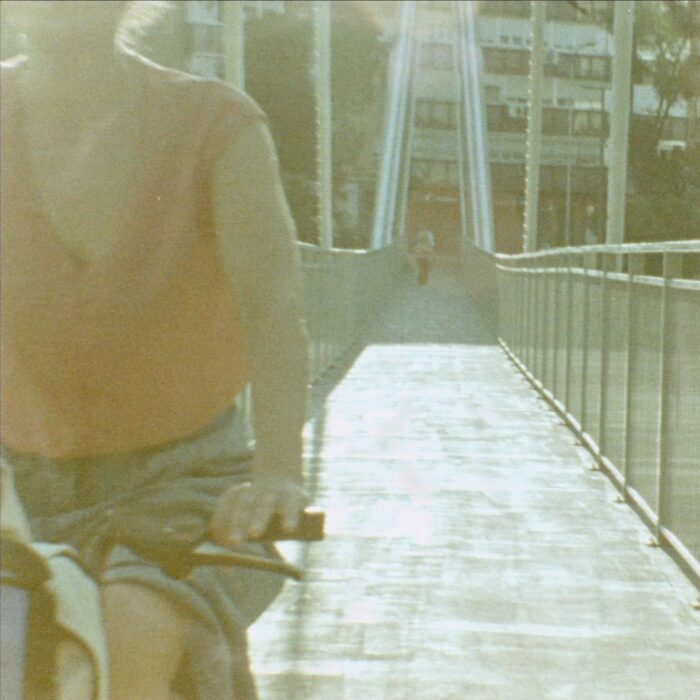
Credit photo: Satellite June